
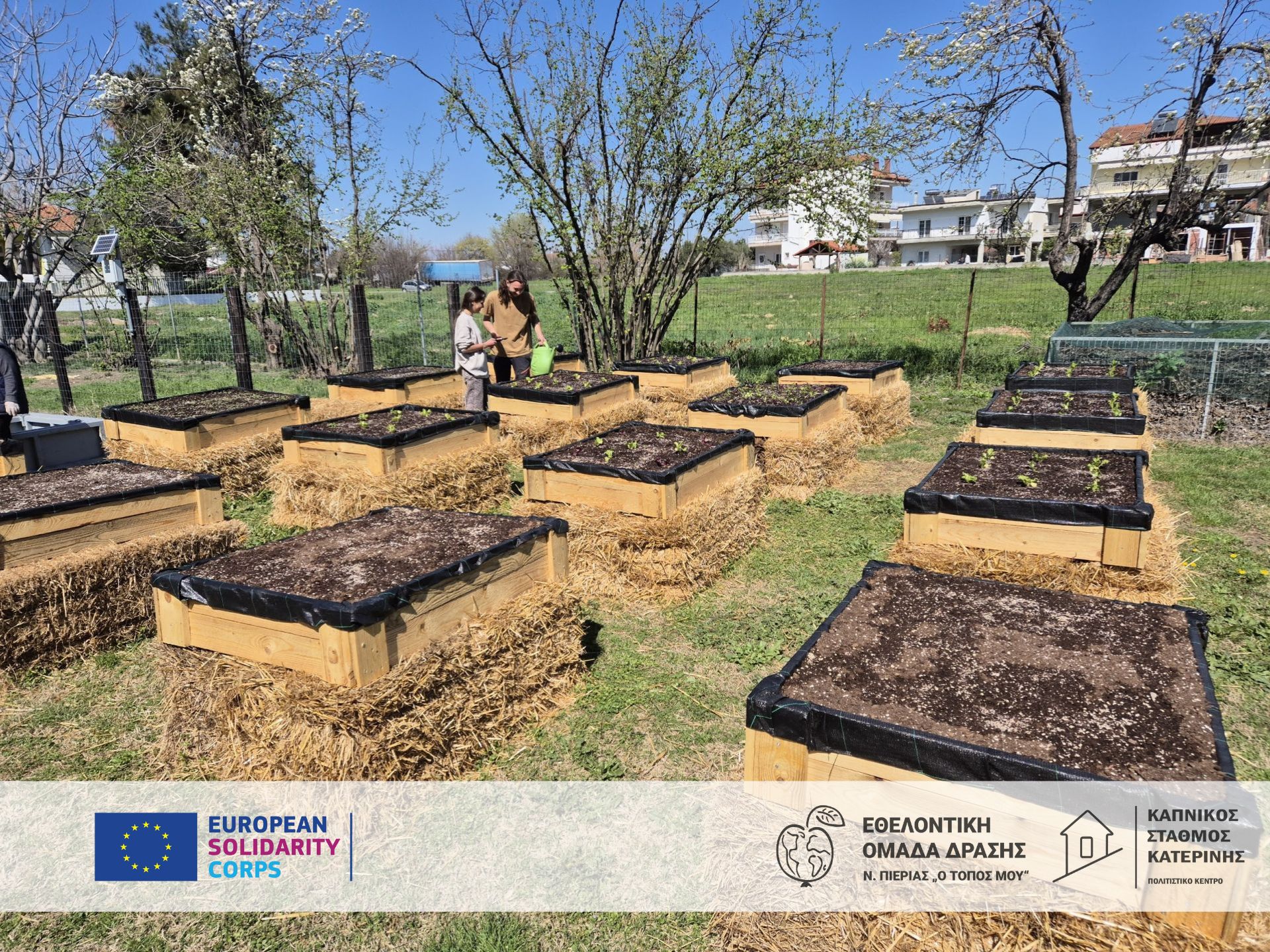
Civic Ecology Garden
A shared space for growing food, learning sustainability, and strengthening the connection between people and the community.
Powered by the Service National de la Jeunesse in Luxembourg and the European Solidarity Corps
What’s it about?
Starting with the first steps taken in 2023, Kapnikos Stathmos Katerini has been developing the Civic Ecology Garden as part of its broader effort to extend the stock of its social warehouses and to strengthen sustainable, community-based action. Transforming an abandoned lot into a green and productive space, the garden serves as a visible example of how unused urban land can be transformed into meaningful spaces that benefit both people and nature. From our collaborations with organic farmers, to our collaborations with schools for organized tree plantings: Our garden works as connection link between people of all ages and backgrounds.
The Civic Ecology Garden functions both as a productive garden and as an open community space. It supports the values of sustainability, reuse, and responsible food production, while offering hands-on involvement in activities such as planting, composting, soil care, water-saving techniques, and seasonal maintenance. Part of the garden’s output is linked to the organization’s solidarity actions, reinforcing the connection between ecology and social support.
The vision of the project is to create a living classroom in the heart of the city, offering educational training for people who want to learn about gardening, vegetable production, and sustainable farming practices. Looking ahead, the project has the potential to expand to additional urban or suburban locations, become a study case, inspire similar initiatives in other cities, and gradually grow into related fields such as broader sustainability education and urban agriculture as experience and expertise development.
What are the exact dates of the activity?
This activity will be implemented in three separate teams:
- The first team will run from 17 February to 09 April, with 16 February and 10 April designated as travel days.
- The second team will take place from 21 April to 11 June, with 20 April and 12 June as travel days.
- The third team will be implemented from 22 September to 12 November, with 21 September and 13 November as travel days.
Additional travel days apply in the case of green travel (Bus, train etc.).
How is it organized / What do I do?
Participants in the Civic Ecology Garden program actively engage in the daily care and development of the garden. Their responsibilities include planting seasonal crops, watering, weeding, composting, harvesting, preparing garden beds and maintaining tools. Volunteers also take part in soil improvement, germination, and learning natural pest management techniques, strengthening their understanding of sustainable and regenerative agriculture. The project is structured in such a way that the participants of all the Civil Ecology Garden teams get to plant and harvest before the respective end dates. This way they literally get to enjoy the fruit of their labor!
Moreover, the project embraces creativity. From building small improvised greenhouses to designing and painting vibrant pots, volunteers create interesting crafts for practical use in the garden.
At the same time, volunteers take up roles and tasks regarding the caring of the community and the maintenance of the facilities. They help ensure the smooth day-to-day functioning of the space. Their responsibilities include keeping shared areas clean, handling minor repairs, preparing the tables for the meals, washing the dishes, managing waste disposal or chopping wood for the heating needs of the facilities.
Volunteers will also take part in cross-participation activities, contributing to other ongoing projects or events within the organization. By engaging in different initiatives, they broaden their skills, exchange experiences with diverse teams, and gain a deeper understanding of our overall mission.
When and how many hours do I work?
The working week runs from Monday to Friday with Saturday and Sunday being task-free. Additional to the weekend, everyone has an extra four vacation days that can be chosen accordingly.
- 08:30-09:00 Breakfast
- 09:00-11:00 Working phase
- 11:00-11:30 Break
- 11:30-13:30 Working phase
- 13:30-14:30 Lunch
- 14:30-16:30 Working phase
- 16:30-21:00 Free
- 21:00-22:00 Dinner